
Harlingen Garage Door Guide
Garage Door Repair in Harlingen: What the Housing Stock and Heat Actually Mean
Harlingen's 1984-2001 housing stock and severe heat band change what a garage door job actually needs. Here's when to call, what drives cost, and what's failing.
- Licensed & Insured
- Same-Area Service Calls
- Upfront Pricing
When It Stops Being a DIY Job
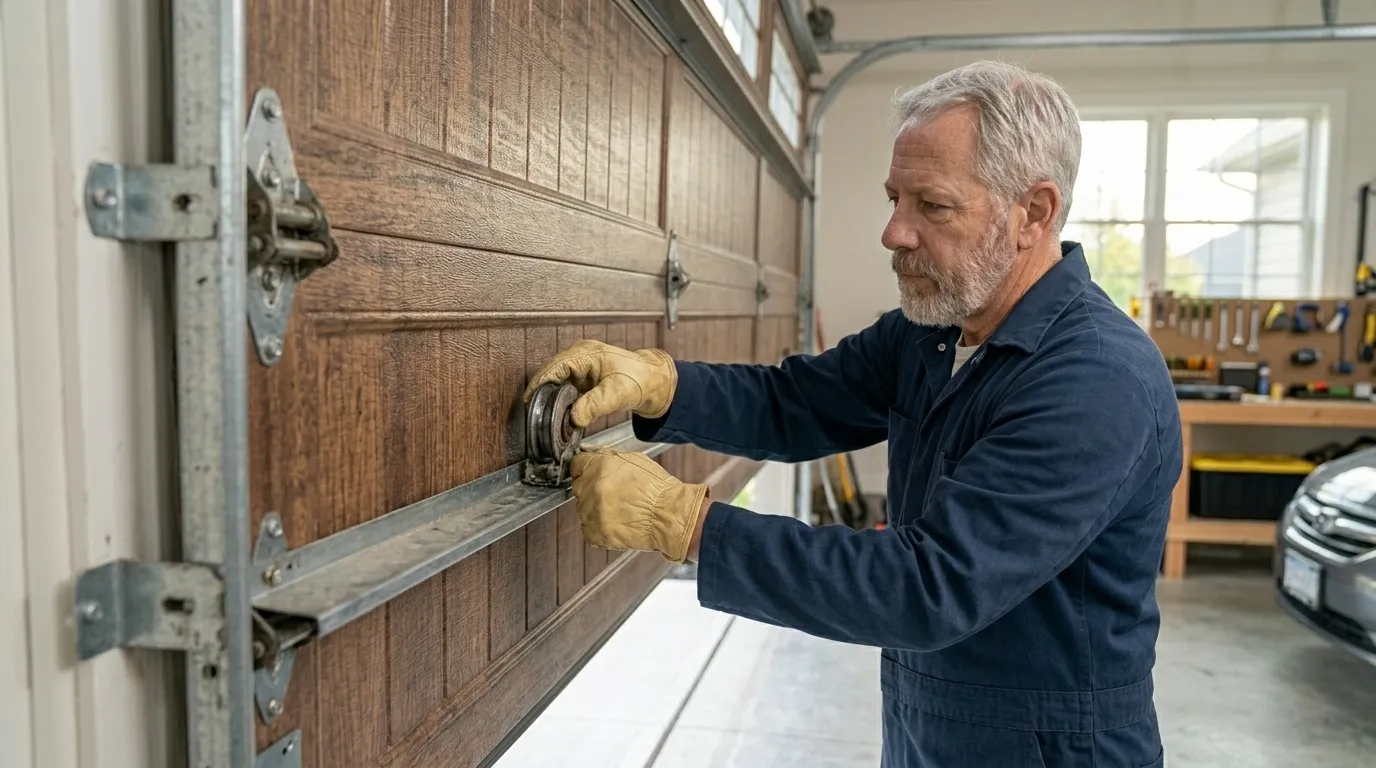
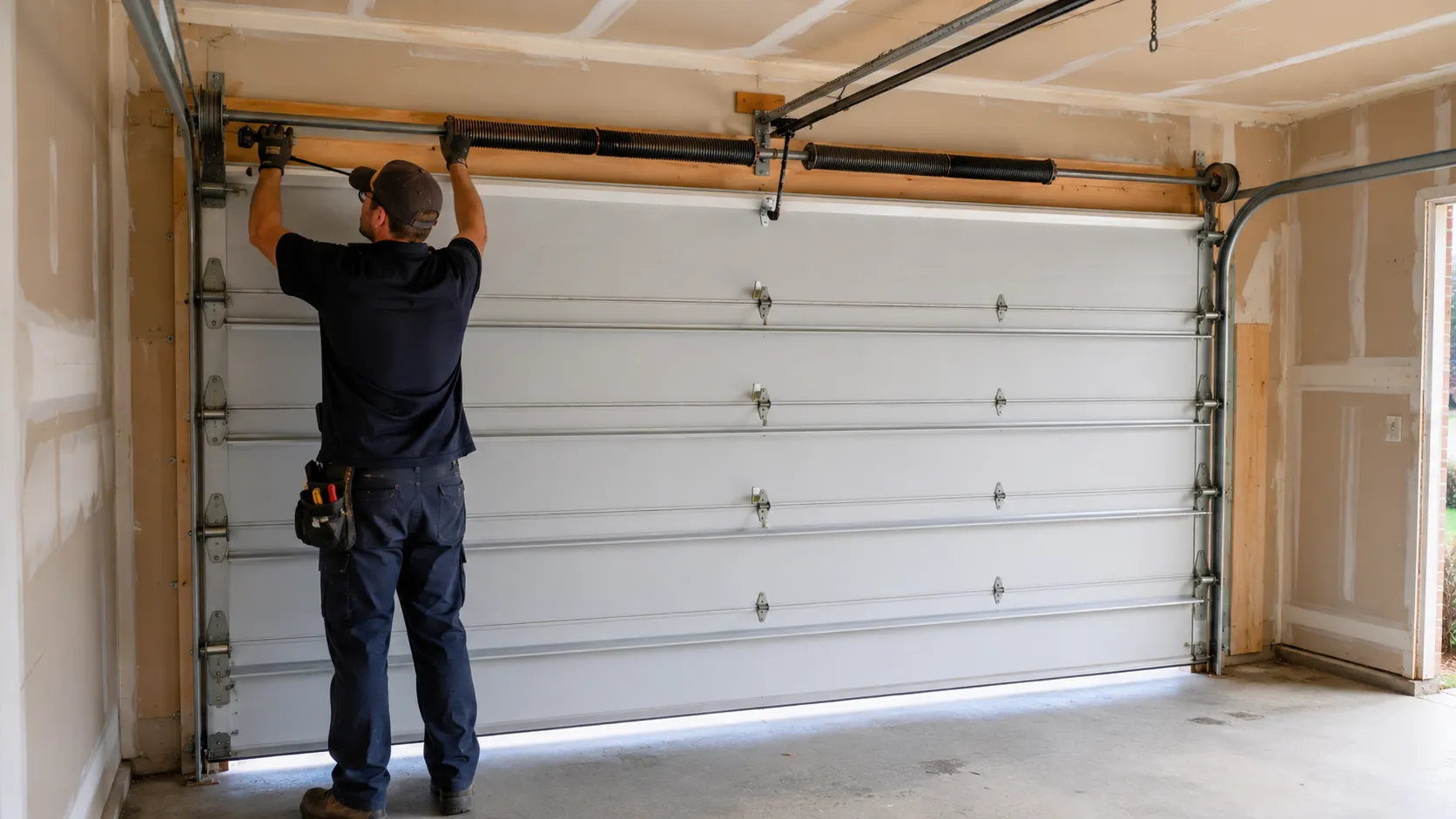
Most houses in this service area went up between 1984 and 2001, with the median landing around 1992. That matters because a door and opener installed when a house was built is now old enough that the parts wearing out aren't the ones a homeowner can swap with a socket wrench. A frayed cable or a bent hinge is a fine weekend job.
A torsion spring on a door from that era, wound to the original tension and mounted on hardware that's been sitting in South Texas heat for three decades, is not. If the opener's circuit board is original to a house built in the late 80s or early 90s, the gears and capacitors inside are past their design life, and forcing it open by hand to "just get it working" usually strips the drive gear the rest of the way.
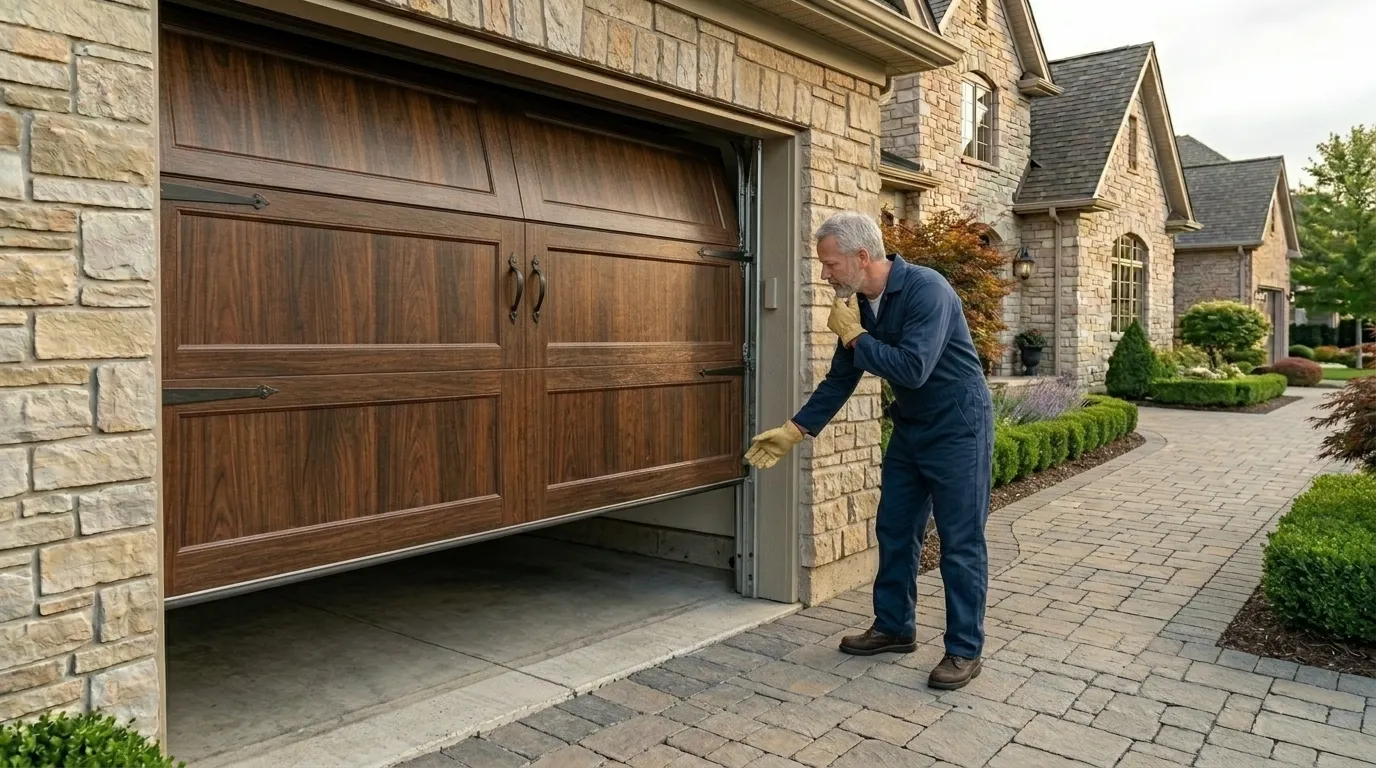
The honest line: if the door won't move and you can hear the motor humming, stop pulling on it. That's a burnt-out capacitor or a stripped gear, not a lubrication problem, and continuing to force it usually turns a $150 part into a full opener replacement. Anything involving a spring under tension, a cable off its drum, or a door that's come off its track on one side is a call, not a project.
The Cost of This Job
We don't publish a flat price here because the range on a real job depends on what's actually broken and how old the door is, and guessing a number that doesn't match your door does you no favors. What we can say: across this service area's 25,988 owner-occupied houses, most built in that same 1984-2001 window, the jobs that cost the least are the ones caught before a part fails completely - a roller that's squealing versus one that's already jumped the track.
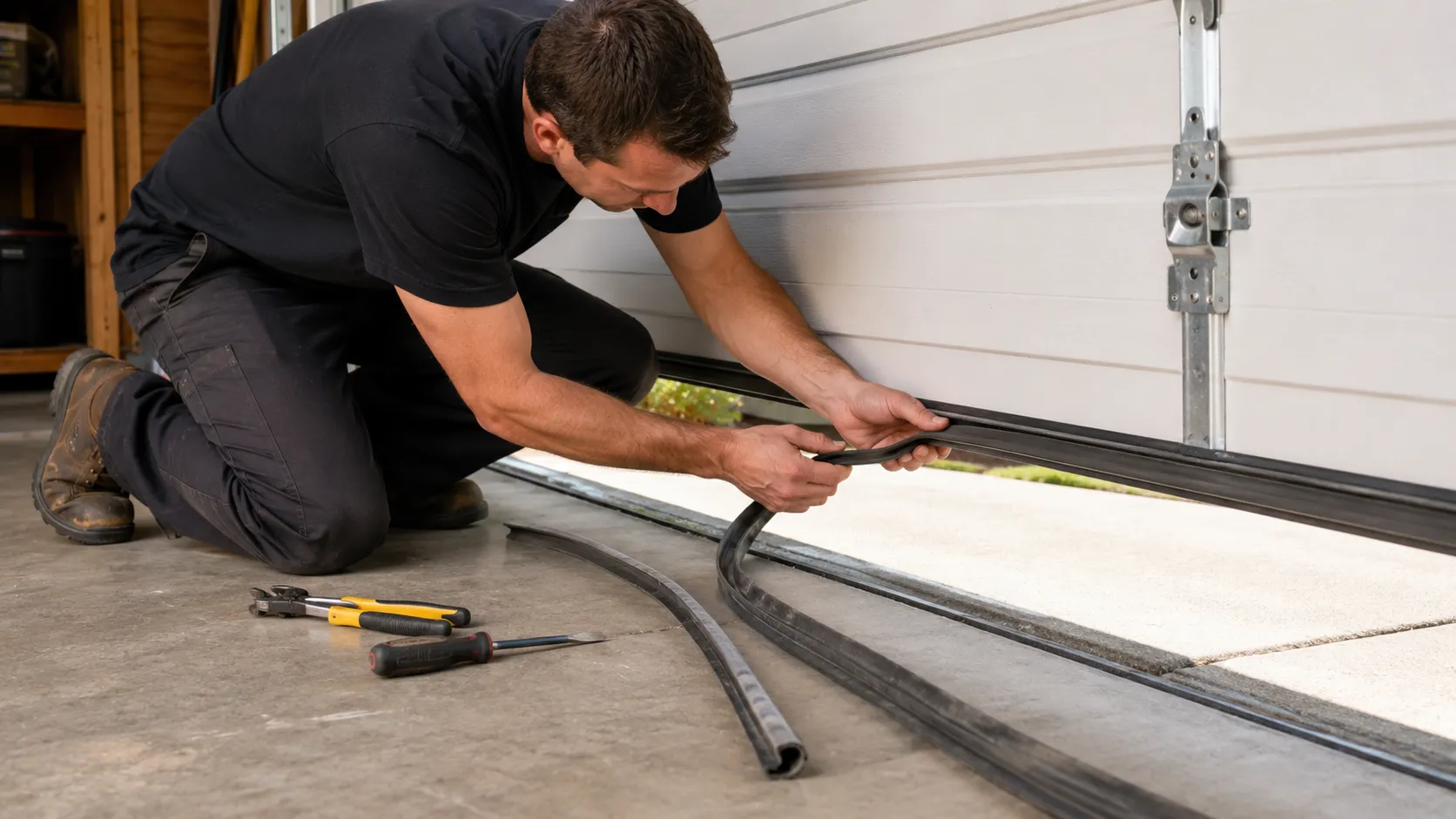
At a median household income of $45,052 for this area, most owners we talk to are weighing a repair against a full replacement, not defaulting to whichever costs more. For a door original to a house from the early 90s, that math often tips toward replacement once you add up a new opener, new springs, and new seals separately.
A door that's had one or two things replaced already but is otherwise sound is usually worth repairing again. One that's never had anything touched in thirty years is a different conversation.
How Local Conditions Play In
This area sits in a severe heat band, and that changes what fails first on a garage door here compared to a milder climate. Foam-core panels from the 1980s and 90s expand and contract every day through the summer, and the adhesive holding the foam to the steel skin gives out well before the steel itself rusts through. You'll see it as a panel that looks fine from six feet away but has a soft, delaminated spot when you press on it.
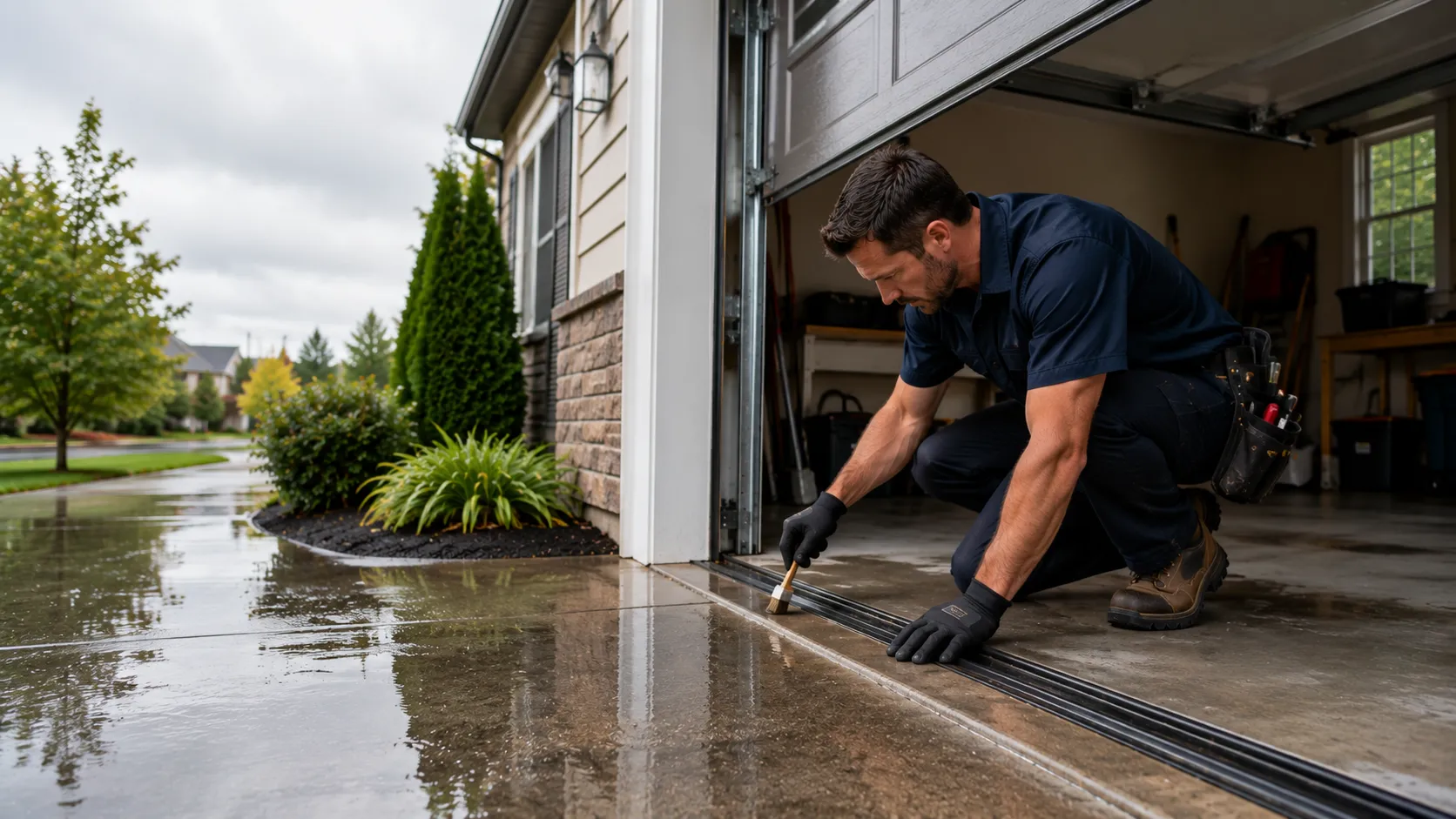
Weather seals and draughts are the other half of it. The bottom seal and the vinyl side seals on a door built in that same era are usually original, and thirty summers of heat cycling turns vinyl brittle.
A cracked bottom seal doesn't just let in draughts - it lets in enough radiant heat through a hot slab that an attached garage can run noticeably hotter than the rest of the house. Openers suffer too: heat-soaked garages push circuit boards and photo-eye sensors past their rated operating range, which is why sensor faults tend to spike on the hottest stretch of the year rather than fail randomly.
What Is Going On
Put the pieces together and the pattern across this service area is consistent: a door and opener installed when the house was built, sometime between 1984 and 2001, now aging out at roughly the same rate across thousands of houses. That's true whether you're four miles out in Primera or up around Midway North twenty miles away - the building stock in the towns we cover skews the same few decades, so the failures cluster the same way.
What that means in practice is that a spring failure, an opener that's stopped responding to the remote, and a seal that's cracked and letting in heat aren't three unrelated problems. They're three symptoms of the same thing: original equipment reaching the end of a normal service life in a climate that's harder on rubber, foam, and electronics than a milder one would be. If your neighbor's door failed last summer and yours is acting the same way now, that's not a coincidence - it's the same house built the same year running the same hardware.
How We Can Help
Garage Door Repair
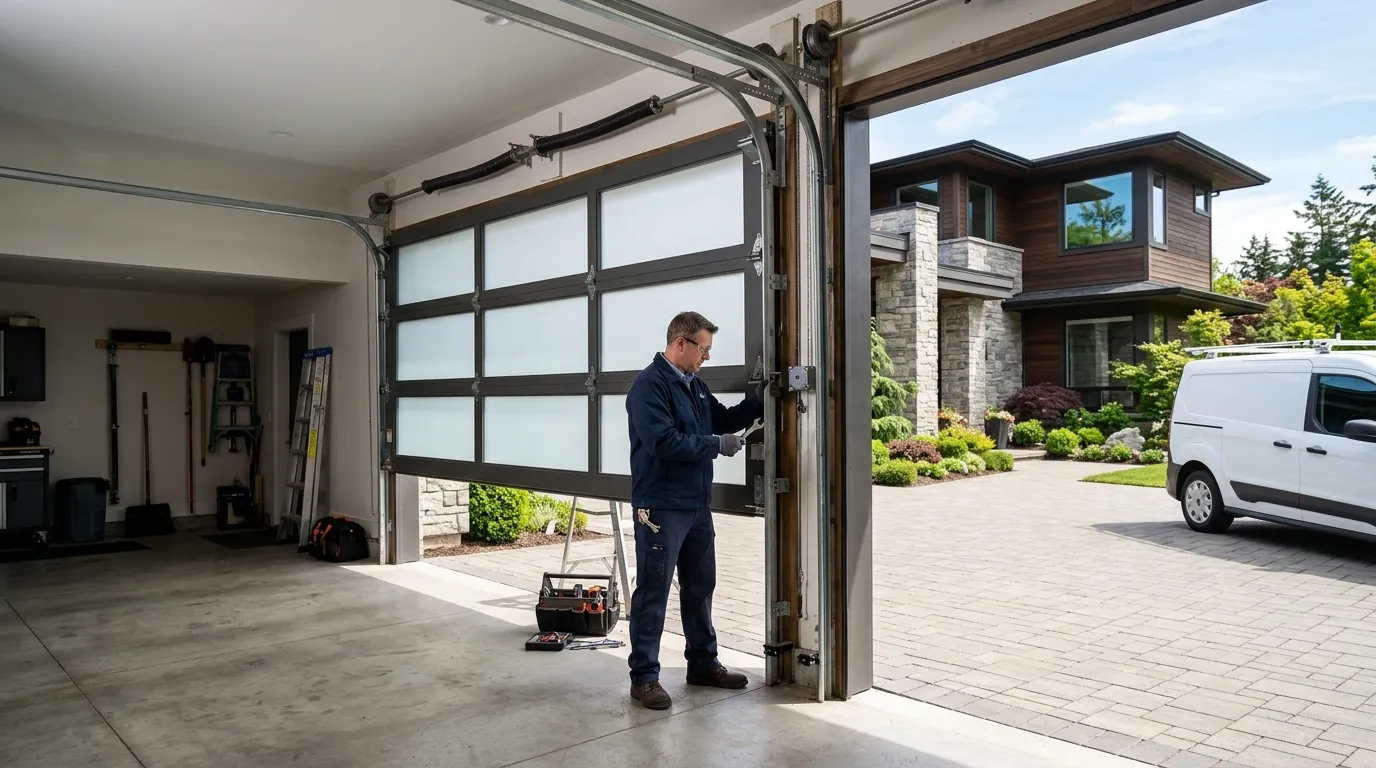
Springs, cables, tracks, rollers, and openers fixed by a tech who explains the problem before touching anything.
Learn more →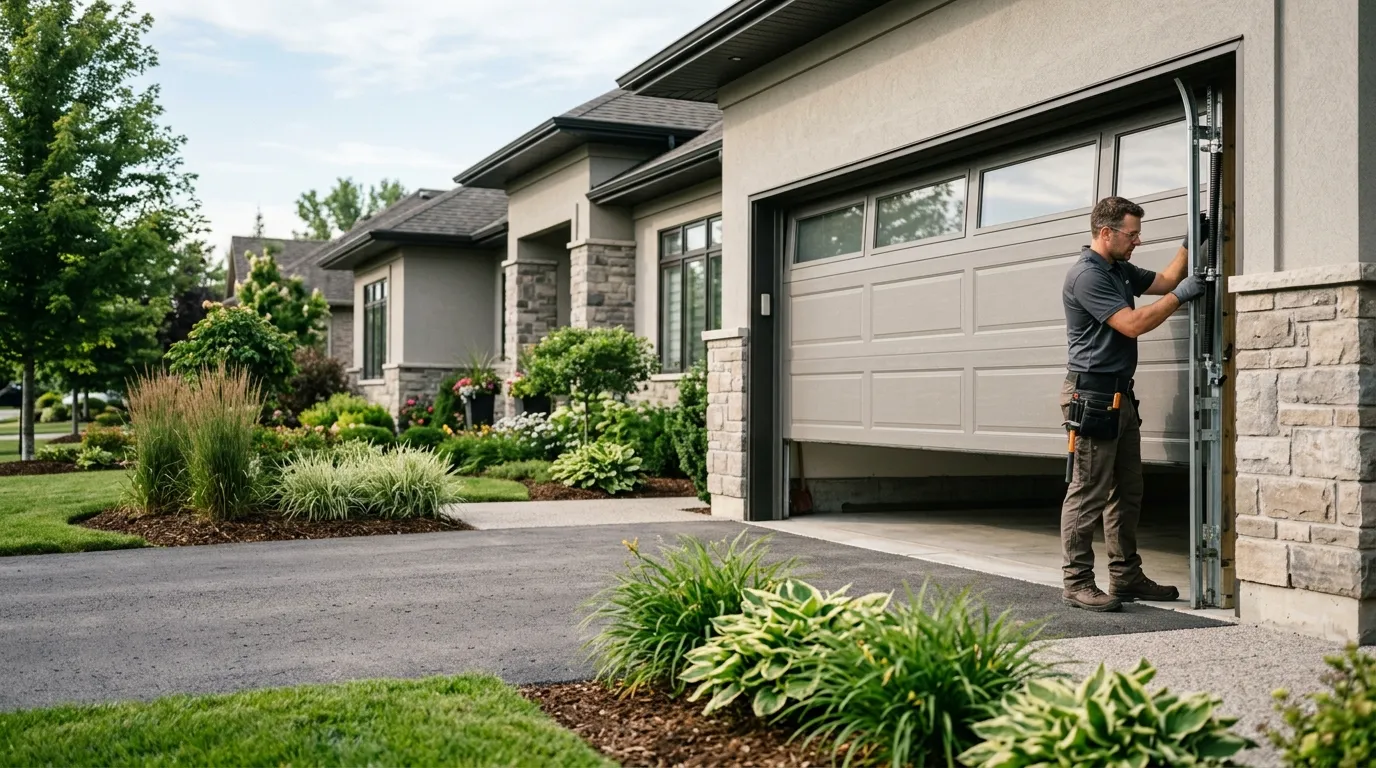
Garage Door Installation
New sectional doors sized and installed for the housing stock actually built in this area.
Learn more →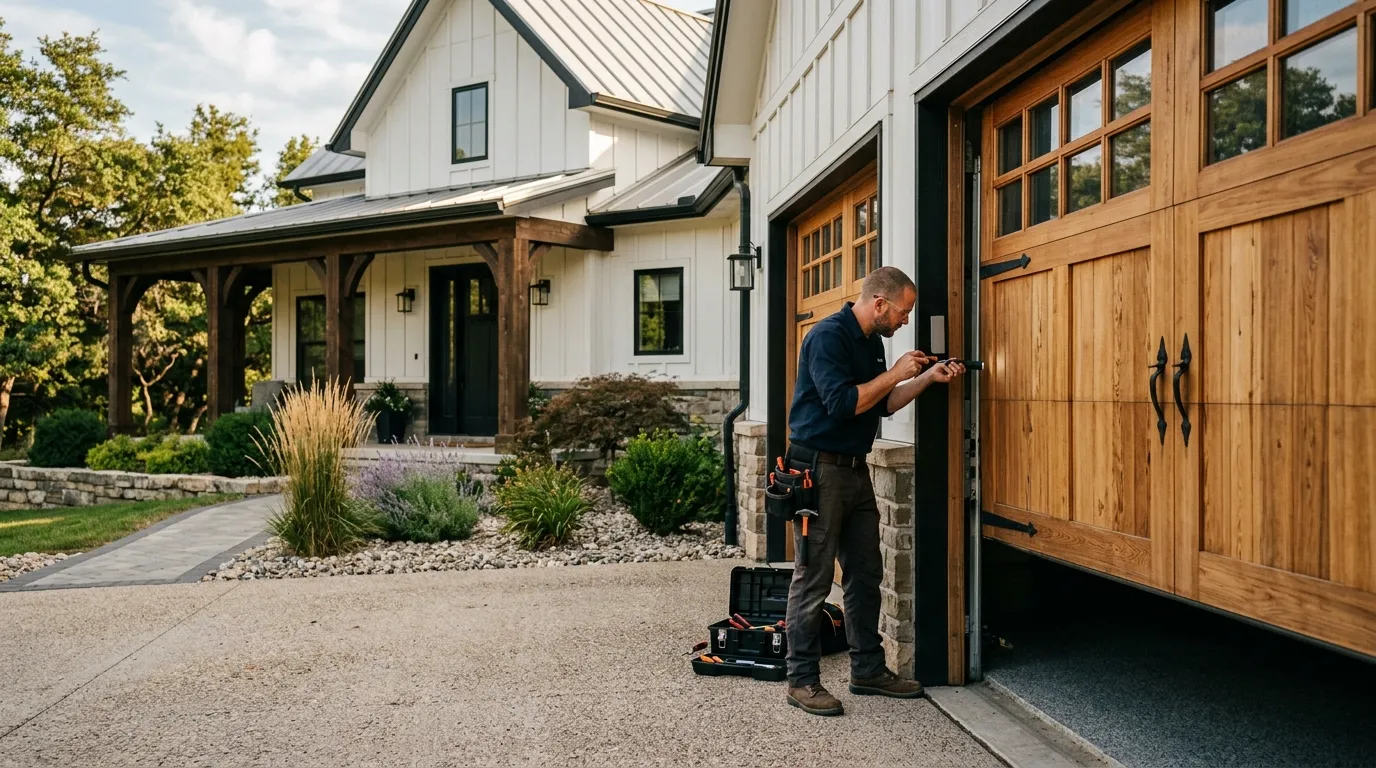
Garage Door Service
Tune-ups, lubrication, and safety checks that catch a small problem before it becomes a service call.
Learn more →Frequently Asked Questions
My opener hums but the door won't move. What's wrong?
That's almost always a burnt-out capacitor or a stripped internal gear, not something a can of lubricant fixes. If the opener is original to a house built in the 1980s or 90s, the gears and capacitor are past their expected life. Don't keep holding the wall button down trying to force it - that finishes stripping the gear and turns a part swap into a full opener replacement.
Why does my seal keep cracking every year?
Vinyl bottom and side seals get brittle under repeated heat cycling, and this area's severe heat band pushes that faster than a milder climate would. If the seal is original to a house from that 1984-2001 stock, thirty-some summers of expansion and contraction is enough to crack most vinyl regardless of brand.
Is it worth repairing a door that's original to the house?
Depends what's already been replaced. If springs or the opener have been swapped once already and the panels are sound, another repair usually makes sense. If nothing has ever been touched on a door from the early 90s, you're often replacing several worn parts at once, and at that point a new door frequently costs less than piecing the old one back together.
Have a Door That Needs a Second Opinion?
Call and describe what it is doing - we will tell you what it likely is.