Harlingen Garage Door Guide
What That Noise in Your Garage Door Actually Means
Grinding, popping, or slapping garage door sounds in Harlingen homes built 1984-2001 usually point to specific worn parts. Here's what each noise means and what it costs to fix.
- Licensed & Insured
- Same-Area Service Calls
- Upfront Pricing
When It Stops Being a DIY Job
A squeak you can chase with a can of lubricant. A grinding sound, a bang, or a door that slaps down the last foot of track is a different problem. Most houses in this service area went up between 1984 and 2001, and that stretch of construction put a lot of extension-spring and early torsion-spring setups into garages that are now well past the age where hardware ages out quietly.
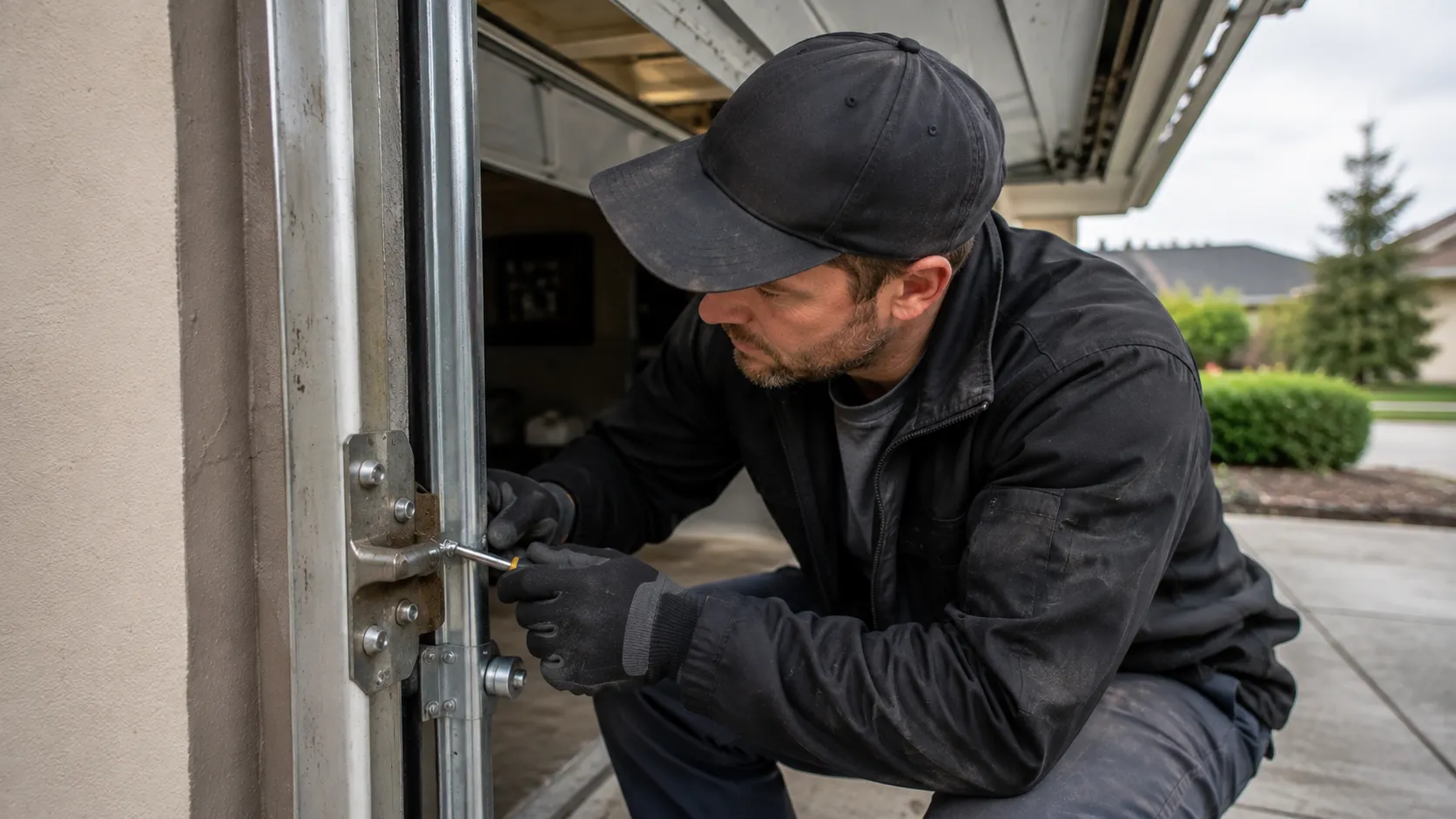
If the noise happens once and doesn't repeat, it's probably a loose bracket, and a homeowner with a ladder and a socket wrench can often find and tighten it. If it repeats every cycle, or gets louder, that's a part failing under load - a spring losing tension, a roller with a flat spot, a cable starting to fray.
Working on a door with a wound torsion spring is where DIY stops being worth the risk. That spring is holding the full weight of the door, and it's the single most common source of a serious garage injury we see called in.
Our limitation here: we don't do same-day parts sourcing on every hardware type. If your door uses an older or oddball spring size from that 1984-2001 stock, we sometimes need a day or two to get the right part rather than force a mismatch onto your track.
The Cost of This Job
We're not going to hand you a number that doesn't apply to your door - every job here depends on what's actually worn and what size the parts are. What we can tell you is how to think about it. The median household income across this service area sits at $45,052, and most of the calls we get are homeowners trying to decide whether a repair is worth doing versus letting a problem sit until it strands the car in the garage.
A noise that traces back to a single roller or a hinge is a small job. A noise that traces back to a spring, especially on a double door, involves more labor because the door has to be fully supported and the old spring removed under tension before a new one goes on. Two springs on the same door usually get replaced together, since the second one is close behind the first if the door is original to the house.
We'd rather tell a homeowner the door isn't worth fixing than run up a bill on a track and opener from the 1980s that's fighting us the whole way. If the drum, track, and opener are all original, sometimes replacing beats patching.
How Local Conditions Play In
This area sits in a severe heat climate band, and that matters more for a garage door than most people expect. Steel track and hardware expand in daytime heat and contract overnight, and that daily cycle works bolts loose and dries out lubricant faster than it would in a milder climate. A door that was dead silent in spring can start banging by mid-summer simply because the grease inside the rollers has thinned out and burned off.
Nylon rollers hold up better than the steel ones under this kind of heat cycling, but they still wear, and a worn roller riding a hot track is one of the more common noise complaints we hear from June through September. Openers age faster here too - the gears and belts inside a garage-mounted unit are sitting in a space that regularly runs hotter than the outside air, and heat is hard on plastic gearing.
We check track alignment and lubrication as a first step on almost every noise call here, because in this climate that's often the actual fix, not a symptom of something bigger.
What Is Going On
A metallic popping sound usually means a torsion spring with a worn coil, and it tends to show up right before a full break. A rhythmic thump once per rotation is almost always a flat-spotted roller, and you can often see the flat side if you watch the wheel go by slowly. A loud bang followed by the door refusing to move is a broken spring - stop using the opener immediately, since the door has lost its counterbalance and the opener isn't built to lift that weight alone.
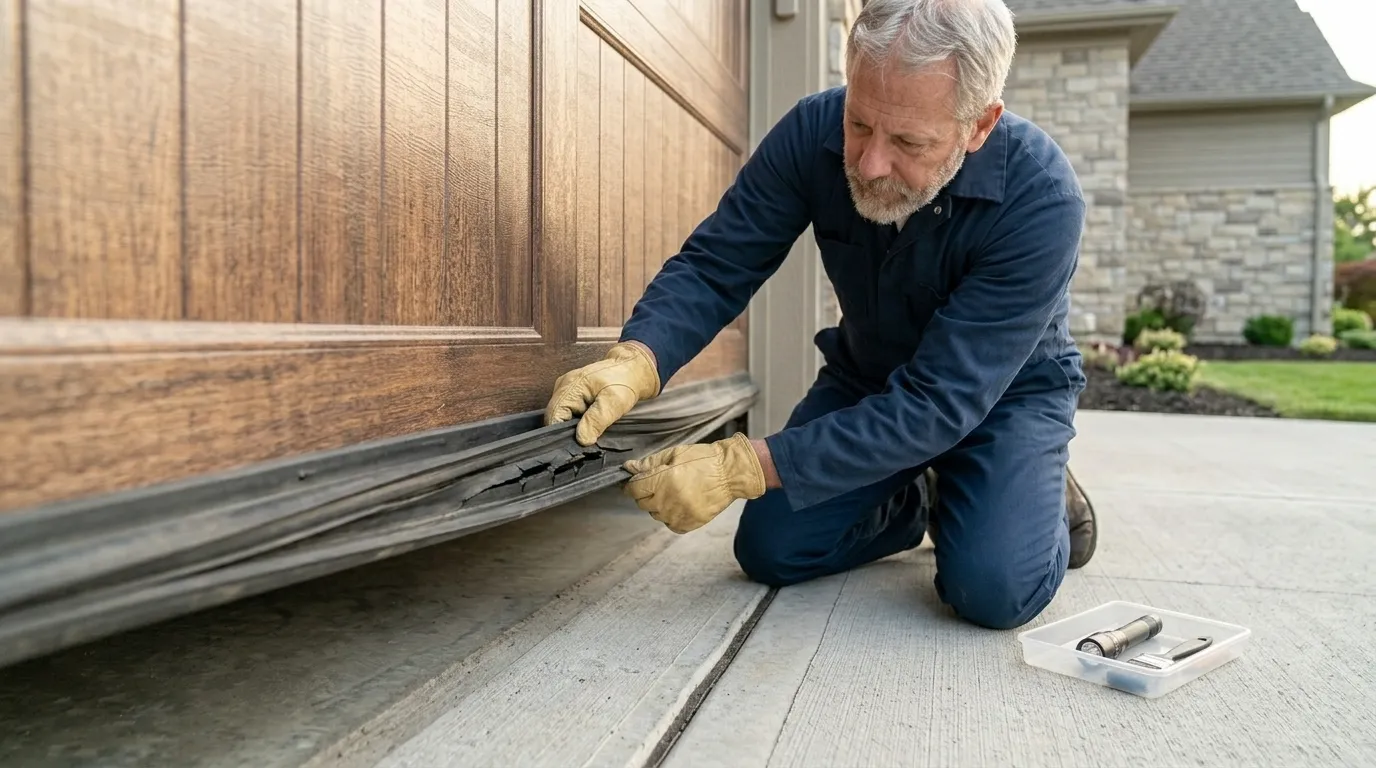
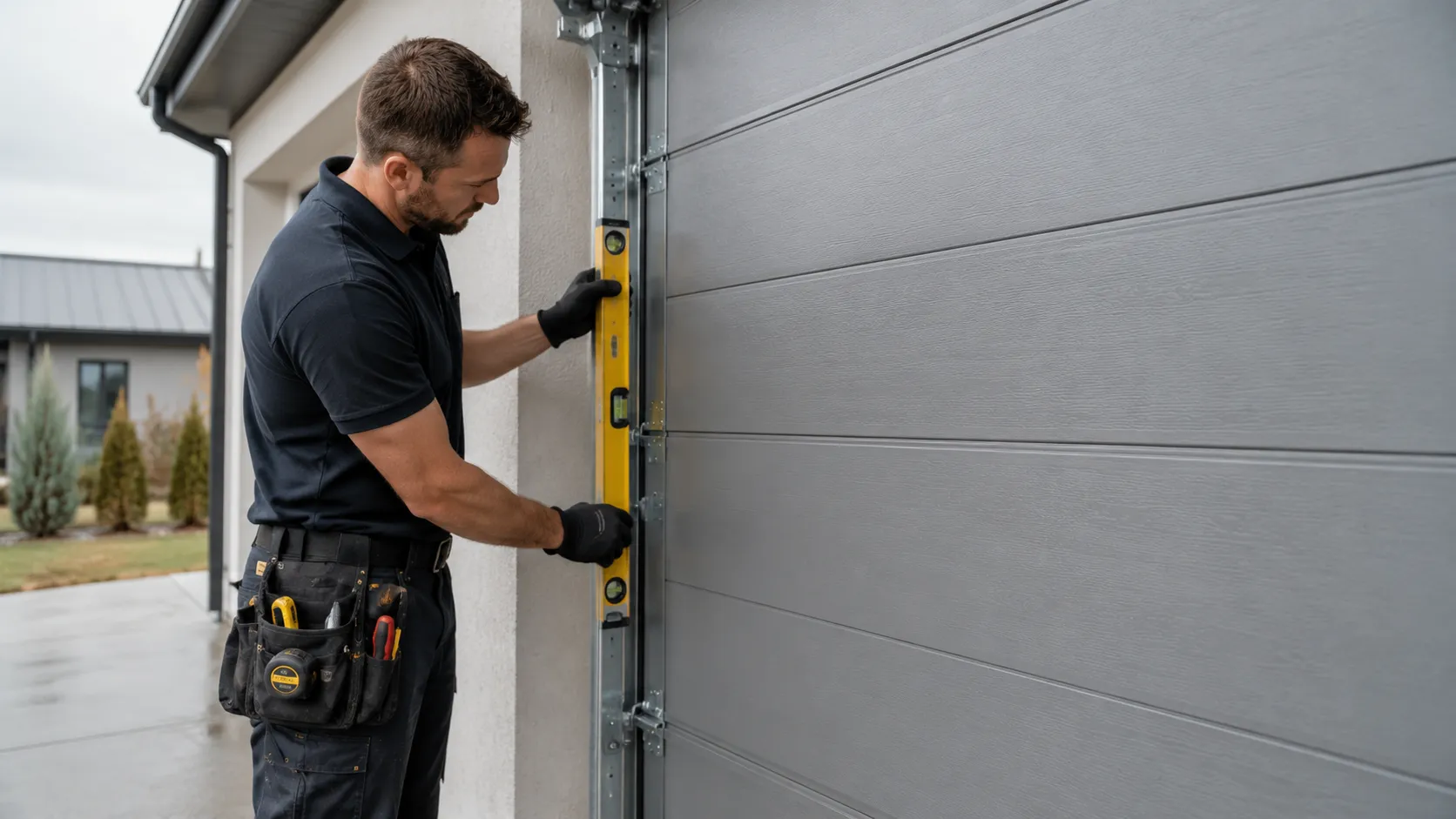
A scraping sound along the sides usually traces back to track that's pulled out of alignment, which happens more with age as the framing around the door settles. Across roughly 48,414 households in this service area, with about 25,988 of those in owner-occupied houses built mostly in the 1980s and 90s, we see the same handful of failure points repeat: original rollers, original torsion springs, and openers that were never serviced after installation.
If you're not sure what you're hearing, record it. A ten-second video with sound tells us more before we arrive than a description usually can.
How We Can Help
Garage Door Repair
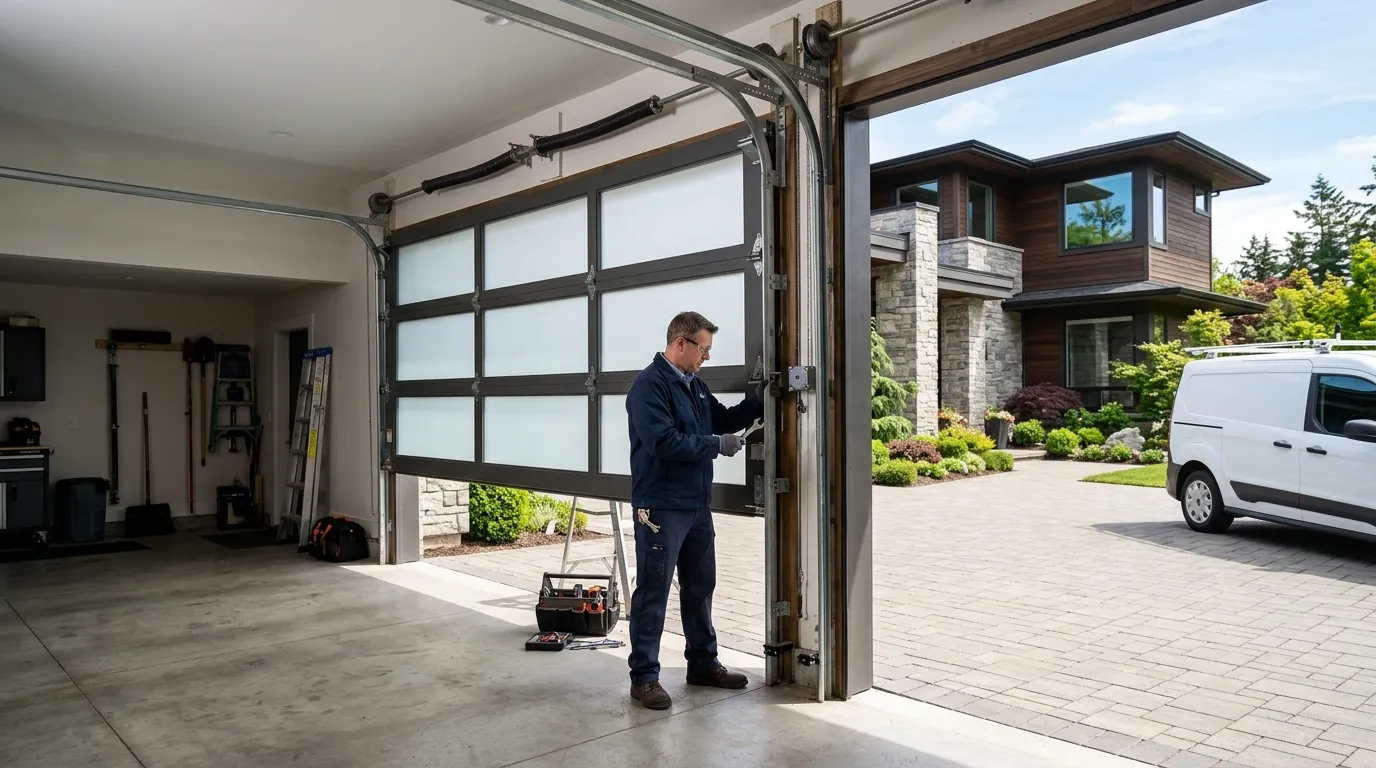
Springs, cables, tracks, rollers, and openers fixed by a tech who explains the problem before touching anything.
Learn more →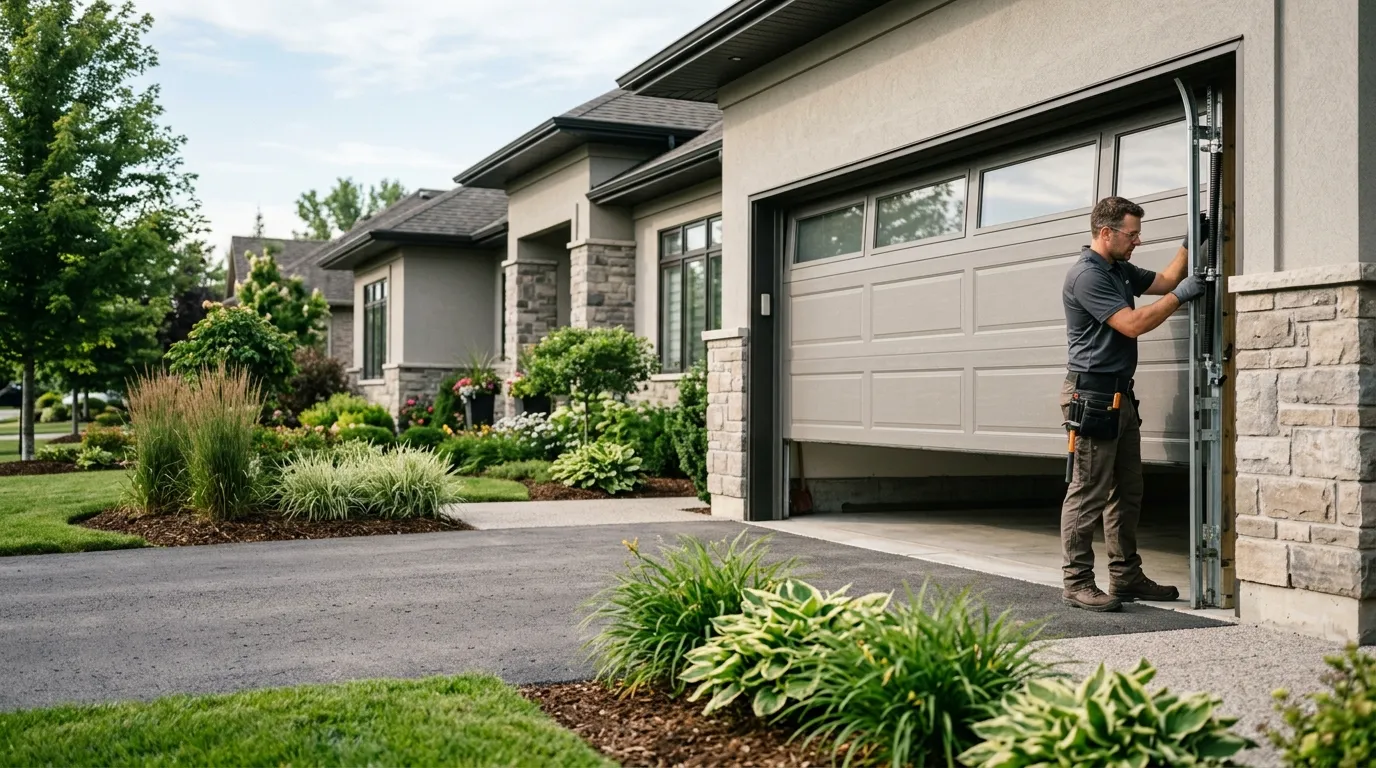
Garage Door Installation
New sectional doors sized and installed for the housing stock actually built in this area.
Learn more →
Garage Door Service
Tune-ups, lubrication, and safety checks that catch a small problem before it becomes a service call.
Learn more →Frequently Asked Questions
My garage door makes a loud bang and won't open. Is that dangerous?
Yes. A loud bang followed by the door not moving usually means a torsion spring has broken. The door has lost its counterbalance, so don't run the opener - it isn't built to lift that weight without the spring, and forcing it can damage the opener or drop the door.
Why does my door get noisier in the summer?
This area sits in a severe heat climate band, and daily heat cycling dries out lubricant and works bolts loose faster than in milder climates. A door that's quiet in spring often starts banging or squeaking by mid-summer as grease in the rollers thins out.
Do you carry parts for older doors on the spot?
Usually, but not always. Homes here were mostly built between 1984 and 2001, and some of that original hardware uses spring or roller sizes we don't stock on the truck. If yours is one of those, we may need a day or two to get the right part.
Have a Door That Needs a Second Opinion?
Call and describe what it is doing - we will tell you what it likely is.